A truly great dress watch doesn’t demand attention—it earns it. It sits beneath a shirt cuff, slim and unobtrusive, until a hand lifts to check the time, and for a moment, its quiet elegance catches the light. It’s not about flash; it’s about harmony—complementing a tailored suit, a silk tie, or a wedding gown without overshadowing them. For nearly a century, the Patek Philippe Calatrava has been the gold standard of this quiet luxury. More than a timepiece, it’s a definition of what a dress watch should be: refined, timeless, and crafted to last not just a lifetime, but generations. It’s for those who understand that the most memorable statements are often the subtlest ones.
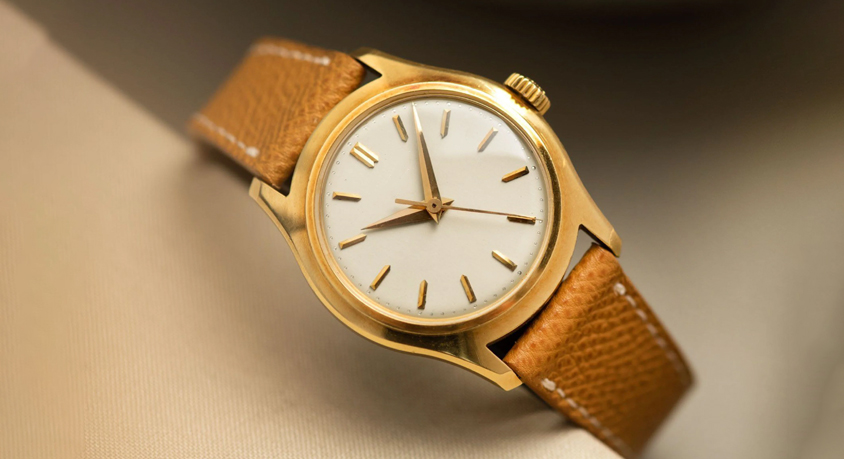
Calatrava's story began in 1932, a pivotal year for Patek Philippe. In the wake of the Great Depression, the brand sought to redefine luxury—not through excess, but through restraint. Inspired by the clean lines of the Spanish Order of Calatrava’s cross (a symbol of elegance and heritage), Patek’s artisans created a watch that rejected the ornate designs of the era. The first Calatrava, reference 96, featured a slim, round 18K gold case, a crisp white dial with simple Arabic numerals, and an ultra-thin manual-wind movement. It was a revolution in understatement: proof that luxury could be found in precision, not decoration. Decades later, that ethos remains—every Calatrava still balances sleekness with substance, never straying from the “less is more” vision that made it iconic.
Crafting a Calatrava is a masterclass in subtlety. Its case, often 37mm to 40mm, is milled from a single block of 18K rose, white, or yellow gold (or platinum for premium editions), then polished to a mirror finish on the edges and brushed on the sides—a textural contrast that adds depth without clutter. The dial is equally deliberate: some models feature “Clous de Paris” (hobnail) embossing, its tiny raised dots catching light like stardust, while others keep it smooth, letting the luminescent hour markers and blued steel hands take center stage. Beneath the dial lies Patek’s in-house movement—often the ultra-thin Caliber 240, with a 48-hour power reserve—finished by hand with Geneva stripes and a skeletonized rotor engraved with the Calatrava cross. Even the case back, when transparent, reveals this artistry, a reminder that beauty lives in the details no one else might see.
What makes the Calatrava enduring is its versatility. It doesn’t just belong at black-tie galas (though it shines there, paired with a tuxedo’s lapel). It fits a Monday morning board meeting, adding gravitas to a charcoal suit without feeling stuffy. It complements a summer wedding’s linen suit, its gold case warming against sun-kissed skin. It even works for a quiet anniversary dinner, where its slim profile slides easily beneath a cashmere sweater. Unlike trend-driven watches that feel dated after a season, the Calatrava’s design is eternal—its round case, clean dial, and slim silhouette never go out of style. It’s a watch that grows with its wearer, from a young professional’s first step into formal life to a grandparent’s gift to a grandchild, a link between past and future.
For collectors, the Calatrava is a treasure. Vintage models—especially 1930s reference 96s or 1950s reference 570s—fetch premium prices at auctions, their value driven by Patek’s uncompromising quality and the Calatrava’s status as a dress watch pioneer. Even modern Calatravas hold their worth, thanks to limited production runs and the brand’s legacy of craftsmanship. But the real value isn’t monetary; it’s the knowledge that this watch will outlive you, passed down as a story—of the meetings it witnessed, the weddings it marked, the quiet moments it made a little more elegant.
Disclaimer: Mention of any brand or trademark is for identification only and does not imply partnership or endorsement