



It happened at 3 AM on a Tuesday. I was staring at my screen, heart pounding, watching the countdown timer on an enemy alliance's attack notification. They had a player with 100 million power. I had maybe 12 million on a good day. By every metric the game offered, I was about to be erased. My resources would be looted. My troops would be slaughtered. My little digital empire would become a cautionary tale for other small players.
Except it didn't happen that way. When their attack landed, their massive army hit my walls and… nothing. Their troops died. Their general retreated. My city stood. The player with 100 million power had just lost a significant chunk of his expensive, carefully cultivated army to someone a fraction of his size. He sent angry messages. I made coffee. And then I did it again. This is the secret heart of Whiteout Survival, the game that has quietly become the ultimate proving ground for anyone who believes that brains can beat money.
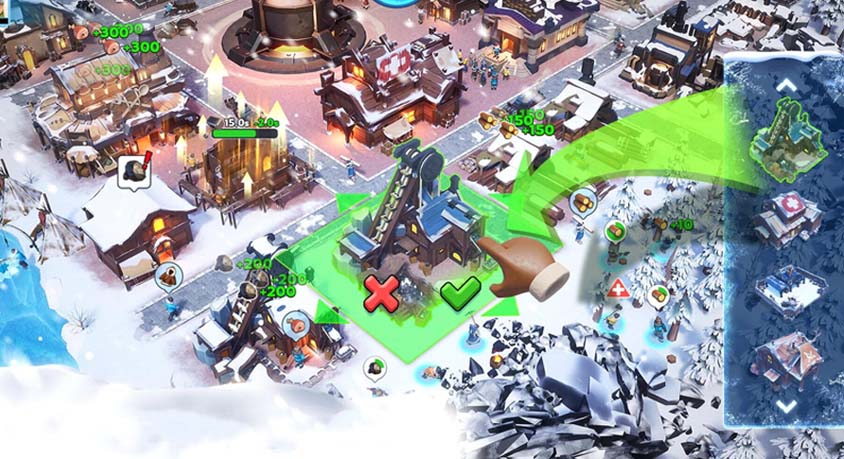
The premise, if you're not familiar, is a survival strategy game set in a frozen wasteland. You build a city, gather resources, train troops, and survive against both the environment and other players. The usual mobile strategy loop. But what makes Whiteout Survival different, what makes it the game where a clever small player can genuinely ruin a whale's day, is the combat system. It's not just about who has more troops. It's about timing. It's about troop composition. It's about understanding the math underneath the flashy graphics. And if you understand that math, you can turn a powerful player's strength into their biggest weakness.
The trick is called "rally timing" and "counter composition," and it's the closest thing to legal cheating this game has. When a player attacks you, they send their army in a march that takes a specific amount of time based on distance. You can see that time. You can watch it count down. And in those seconds, you can do something they don't expect. You can request reinforcements from your alliance. You can change your troop composition. You can bait them into attacking a city that isn't what it seems. The key is understanding that the game's combat uses a rock-paper-scissors system: infantry beats archers, archers beats cavalry, cavalry beats infantry. If you know what they're sending, you can counter it. If you counter it, even a much smaller force can devastate a larger one.
The magic happens when you combine timing with psychology. The big players, the ones who spend real money to build massive armies, get used to winning. They stop checking. They stop thinking. They see a small city and assume it's free loot. They send their best troops, often without scouting, without checking if your alliance has reinforcements waiting. And that's when you hit them. You watch their march timer. You coordinate with your alliance. You build a trap. Their troops arrive, expecting an empty city, and instead they hit a wall of perfectly countering units backed by reinforcements that appeared in the last thirty seconds before impact. Their expensive army, the one they paid real money to build, gets shredded. You get their resources. They get a lesson in humility.
For the player who loves this, the audience is anyone who's ever been underestimated. It's for the underdogs, the strategic thinkers, the people who enjoy outsmarting someone with deeper pockets. It's for anyone who's ever played a game where money usually wins and wanted to prove that it doesn't have to. The game rewards patience, observation, and a willingness to do math when everyone else is just clicking buttons. It asks you to learn the systems, to understand the numbers, to think three steps ahead. And when it works, when your little city holds against a giant, the satisfaction is unmatched.
A few things to know before you start building your trap. The game is a long-term commitment; this isn't something you master in a weekend. The alliances are crucial; you can't do this alone. The combat system takes time to understand; read the guides, learn the numbers, test small before you try big. And the players you're outsmarting? They will be angry. They will message you. They will try again. That's part of the fun. The monetization exists, as with any mobile game, but the tools to beat spenders are available to everyone who takes the time to learn them.
Disclaimer: Mention of any brand or trademark is for identification only and does not imply partnership or endorsement