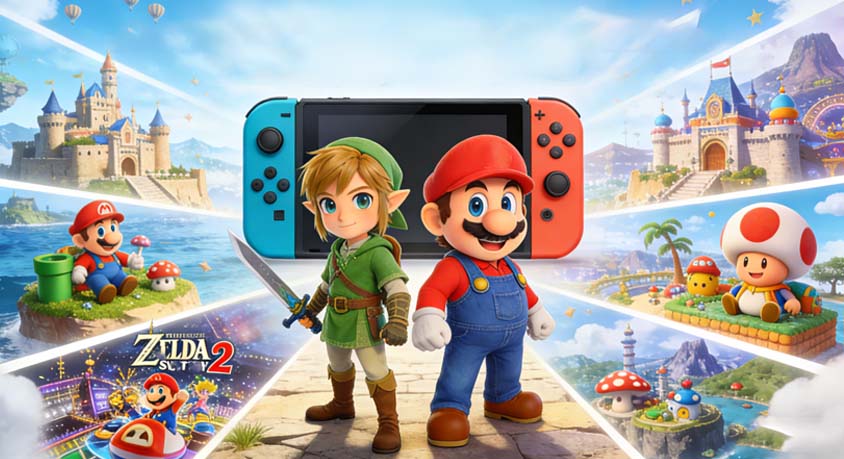
The internet has been buzzing about the Switch 2 for so long that I’m starting to believe the real next-generation hardware is the collective heat generated by our overclocked imaginations. We’ve built a mythical device in our minds, a sleek hybrid beast that renders The Legend of Zelda in such detail you can count the pores on Ganondorf’s nose, all while somehow still fitting in the same fanny pack. But lately, the whispers from the usual rumor mills have taken a turn, shifting from breathless wish-lists to something that sounds suspiciously like a spreadsheet. And for the dedicated players who have spent seven years building a library and a lifestyle around that little tablet, the new details don’t sound like an exciting leap forward—they sound like a logistical headache waiting to happen.
Let’s talk about the big, scary phrase floating around: “backward compatibility with caveats.” This is corporate-speak that translates roughly to “Yes, but it’s going to be annoying.” The dream was simplicity itself: you take your old Switch game card, you pop it into the new, shiny machine, and it just works, maybe even looking a little snappier. The emerging nightmare scenario involves digital licenses, convoluted upgrade paths, and the potential for a “premium” fee to unlock better performance for your old games. Imagine digging through your digital library, finding Super Mario Odyssey, and being greeted by a prompt asking if you’d like to pay $10 to make Mario’s hat render in 4K. It turns the joyful act of replaying a classic into a transactional chore, a microtransaction for your memories. The magic of the Switch was its effortless pick-up-and-play vibe; the concern is that its successor might replace that with pick-up-and-pay.
Then there’s the hardware speculation itself, which seems focused not on revolutionizing gameplay but on catching up. Talk of a more powerful chip and an LCD screen instead of OLED feels less like a bold step into the future and more like a cautious shuffle to match what other platforms offered half a decade ago. For players who cherished the Switch precisely because it wasn’t chasing raw graphical power, this feels like a betrayal of its own identity. We loved it for its quirky games and unparalleled portability, not its frame rates. The worry is that Nintendo, in trying to address the technical complaints, might sand down the very edges that made the Switch special, delivering a device that’s more powerful but also more… generic. It’s the anxiety of watching your favorite weirdo friend decide to get a sensible haircut and a corporate job.
But perhaps the most profound, unspoken fear lurking in all this is the fear of obsolescence—not of the console, but of our current way of playing. The current Switch is a perfect, self-contained ecosystem. The rumors of new cartridges, new docking features, and a shifted focus hint at a platform that might not just be an upgrade, but a replacement. Will my beloved, stick-drift-having Joy-Cons still work? Will my carefully curated home screen carry over? Or will we be forced into a messy transition, a digital migration where some of our favorite things get lost in the move? For a community that found comfort in the Switch’s consistency through a chaotic world, the prospect of that comfort being disrupted is what truly stings. We’re not just afraid the Switch 2 won’t be powerful enough; we’re afraid it won’t feel like home. And Nintendo has always been better at selling us feeling than flops. So as the leaks trickle out, they’re not just specs on a page—they’re sounding an awful lot like an eviction notice from a place we’ve loved living.
Disclaimer: Mention of any brand or trademark is for identification only and does not imply partnership or endorsement