Apex Legends exploded onto the gaming scene in 2019 with no marketing buildup, no teaser campaign, and no early access hype. Yet within 72 hours, it had over 10 million players—and it hasn’t looked back since. Developed by Respawn Entertainment, the creators of Titanfall, Apex Legends brought a fresh take to the overcrowded battle royale genre, combining team-based hero abilities, slick gunplay, and lightning-fast movement into one of the most beloved competitive shooters in the United States.
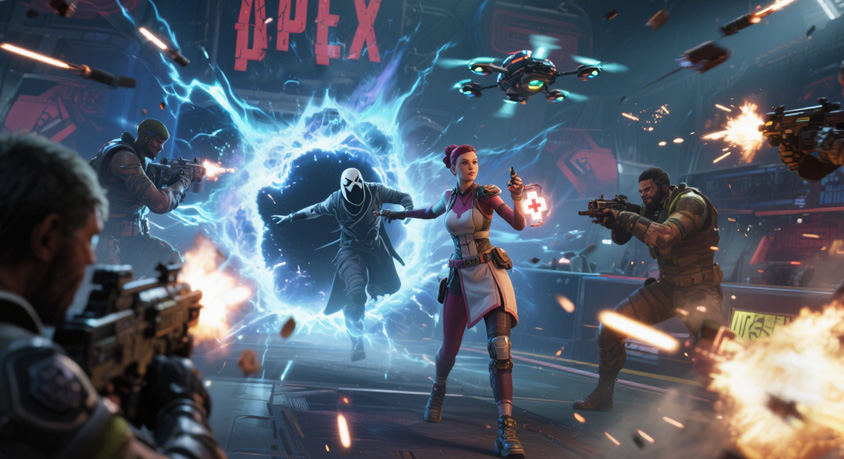
Unlike most battle royale games at the time, Apex Legends offered something more than just “last man standing” gameplay. It introduced a cast of unique characters—called Legends—each with distinct abilities, personalities, and backstories. From Wraith’s dimensional rifts to Lifeline’s combat drone, these skills opened up new tactical approaches to every match. American players, particularly those who loved games like Overwatch or Valorant, were immediately drawn to the strategy and synergy these roles provided.
One of the game’s most acclaimed features is its movement system. Drawing from Respawn’s experience with Titanfall, Apex offers fluid traversal with sliding, climbing, and sprinting that feels fast and responsive. In a typical match, players are constantly jumping from rooftops, zipping down hills, or flanking enemies with aggressive verticality. This constant motion makes the game feel dynamic and thrilling, and has become a favorite among high-skill players and streamers across the U.S.
Another key reason for Apex’s enduring success is its communication system. The “ping” feature—allowing players to mark enemies, weapons, locations, or directions with a single button—was groundbreaking. It enabled squad coordination even without voice chat, making the game more accessible and team-friendly. American players especially appreciated this, as it allowed them to enjoy high-level team play without the pressure of talking to strangers online.
Apex Legends is also free to play and supported by a robust live service model. Each new season brings updated maps, new characters, weapon balances, and limited-time events. Respawn has maintained a steady content rollout that keeps the game fresh without overwhelming casual players. In the U.S., this seasonal approach has helped the game stay culturally relevant, with new Legends and updates regularly trending on Twitch and Reddit.
Visually, Apex stands out with its bright, sci-fi aesthetic. Set in the Titanfall universe, the game is filled with futuristic architecture, alien landscapes, and cutting-edge weapons. Unlike the gritty realism of other shooters, Apex embraces style and creativity—qualities that appeal strongly to younger American gamers who favor games that look as good as they play.
The esports scene for Apex Legends has also grown steadily. In the United States, tournaments like the ALGS (Apex Legends Global Series) have offered a platform for professional teams and rising stars alike. While it doesn’t command the same viewership as League of Legends or CS\:GO, Apex has carved out a respectable niche in competitive FPS circles, helped by Respawn’s continued support and prize incentives.
Apex Legends represents a modern success story in American gaming culture. It proved that even in a saturated market, innovation and polish can break through. It combined the thrill of survival games with the strategic depth of hero shooters, all wrapped in fast-paced, adrenaline-pumping gameplay. For Gen Z and millennial players across the U.S., Apex isn’t just another free-to-play shooter—it’s a skill-based playground where teamwork, reflexes, and strategy collide in every match. And for a game that came out of nowhere, it shows no signs of slowing down.
Disclaimer: Mention of any brand or trademark is for identification only and does not imply partnership or endorsement